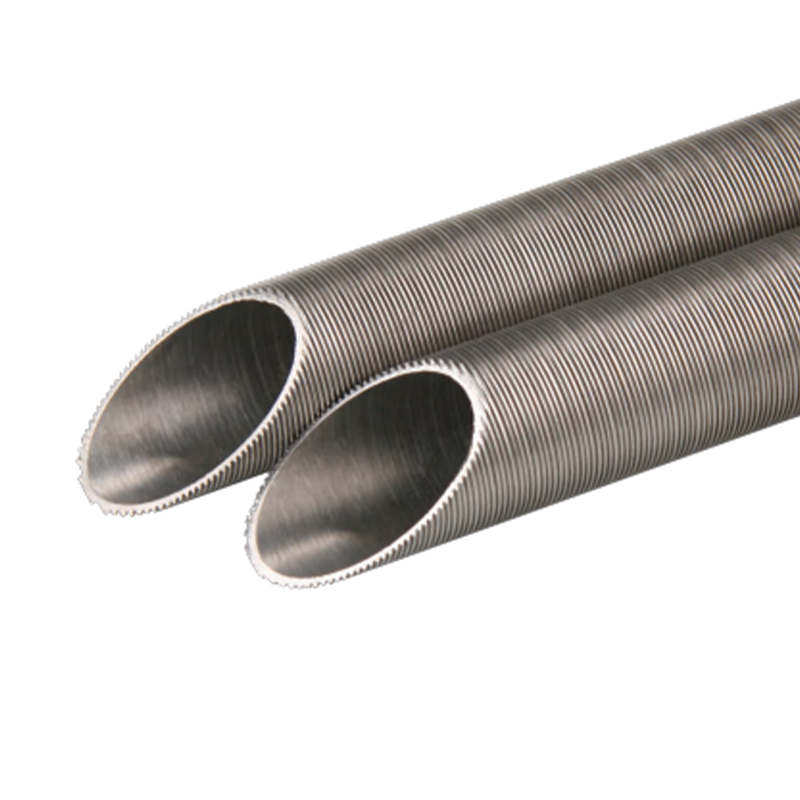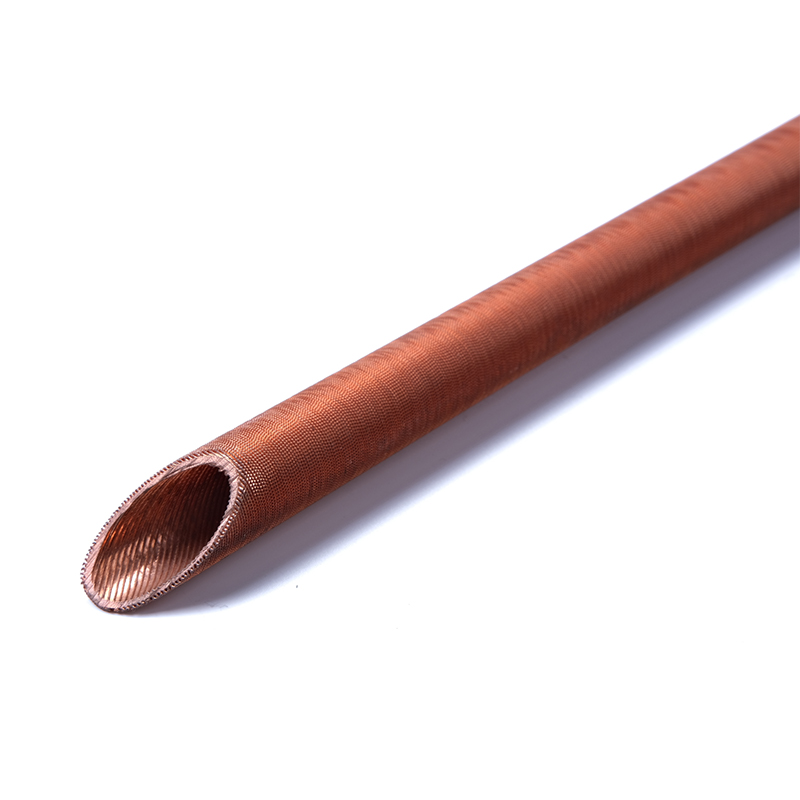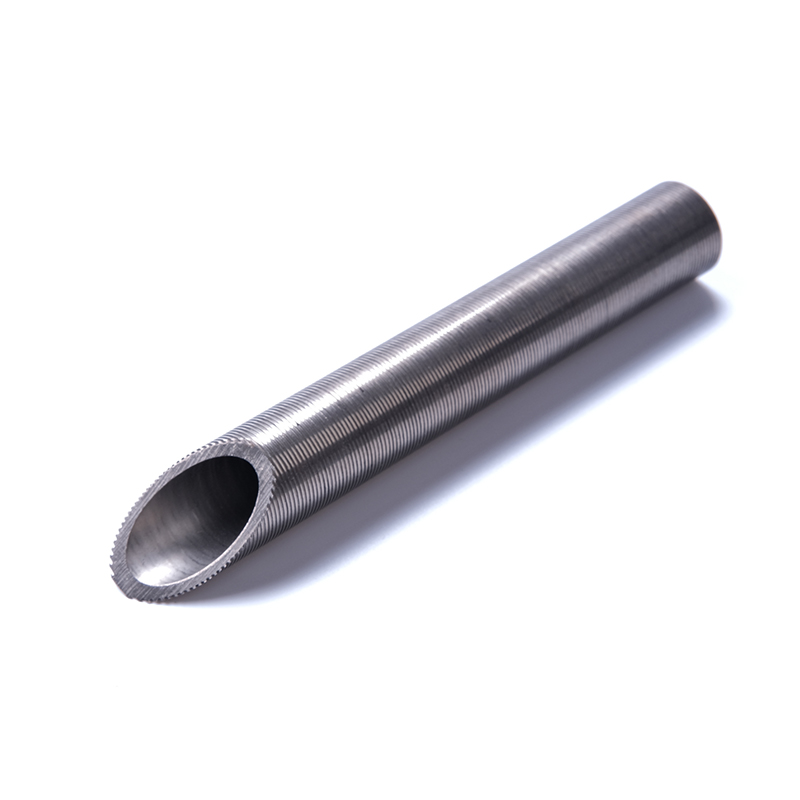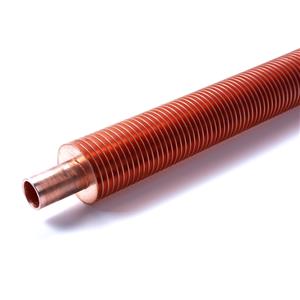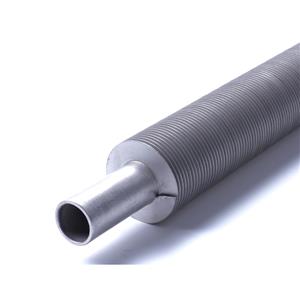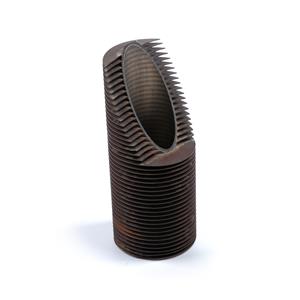
Carbon steel low finned tube

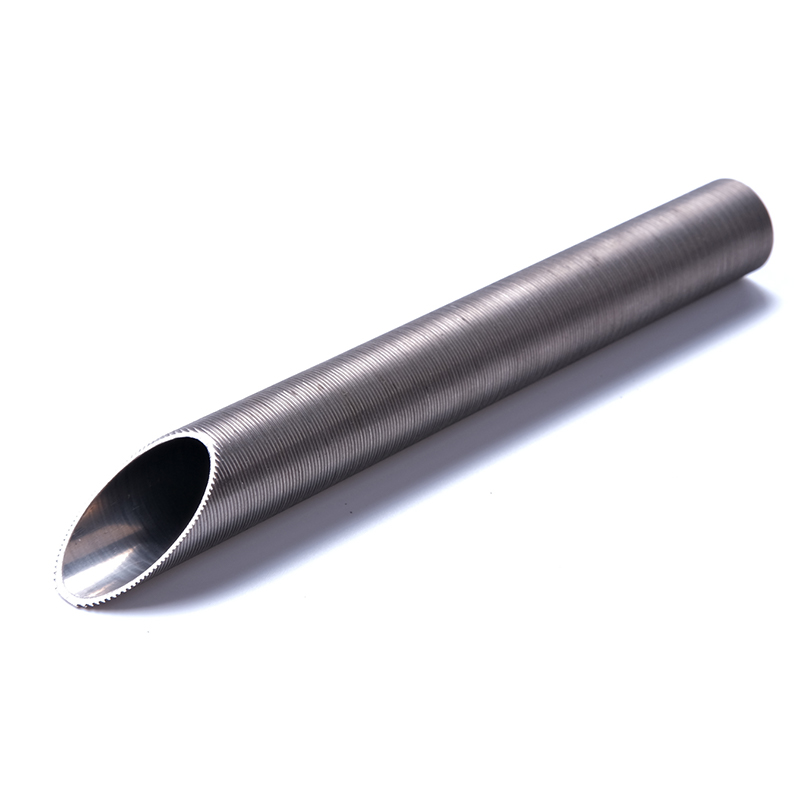
used in industrial heat exchange systems where cost efficiency and mechanical strength are key considerations. By forming continuous helical fins on the outer surface of carbon steel tubes, carbon steel fin tube solutions significantly increase heat transfer area compared with plain tubes. Enhanced surface geometry allows low finned tubes to improve thermal performance while maintaining compact equipment design.
Carbon Steel Integral Low Fin Tubes are manufactured by directly extruding small, shallow fins from the outer surface of the base tube. Unlike high-fin tubes, their outer diameter remains close to that of the original tube, which allows them to be easily installed into standard shell-and-tube heat exchangers without requiring changes to baffles or tube sheets.
The integral extrusion process ensures that the fins and the tube are formed as a single piece, creating a continuous metal structure with excellent heat conduction and mechanical integrity. Compared with plain tubes, low fin tubes significantly enhance the external surface area, resulting in improved overall heat transfer performance.
In practical applications, carbon steel low fin tubes are widely used due to their cost-effectiveness and good mechanical strength. They are especially suitable for large-scale heat exchangers in industries where corrosion conditions are moderate and budget control is important, offering a strong balance between performance and cost.
Advantages
Enhanced Surface Area
Low fin tubes provide approximately 2.5–3 times the external surface area of bare tubes, improving heat transfer efficiency without increasing exchanger size.
Optimized Investment Cost
For new equipment, the improved efficiency allows for fewer tubes or smaller exchangers, reducing overall capital expenditure.
Ideal for Retrofitting
They can be used to upgrade existing heat exchangers, boosting performance without major structural modifications such as resizing the shell or altering piping systems.
Compact and Lightweight Design
By increasing heat transfer capability per unit area, low fin tubes help reduce equipment footprint and weight—an important factor for offshore or space-limited installations.
Material Options Including Carbon Steel
A wide range of materials can be used, with carbon steel being a common choice for general industrial service. It offers an economical solution for applications such as power plants, refineries, and HVAC systems where extreme corrosion resistance is not required.
Reduced Maintenance Costs
With proper material selection, low fin tubes can extend service life and reduce maintenance frequency, especially when compared to plain tubes operating under similar conditions.
Applications
Integral low fin tubes are commonly used in heat exchangers across industries such as petrochemical, power generation, and general process engineering. They are particularly effective when gas (e.g., air) flows over the finned surface while liquid flows inside the tube.
Carbon steel low fin tubes are frequently applied in:
Air coolers and condensers
Power plant heat exchangers
Oil & gas processing systems
General industrial heat recovery systems
When to Consider Low Fin Tubes
When shell-side heat transfer is the controlling resistance
When seeking a cost-effective upgrade from plain tubes
When working with large equipment where carbon steel is preferred for budget reasons
When retrofitting or debottlenecking existing exchangers
When space, weight, or efficiency improvements are required
 | d= outside diameter of plain end di= inside diameter of plain end dr= root diameter do=diameter over fins di= inside diameter of fin section Xp=wall thickness of plain end Xf=wall thickness under fin Fh=height of fin Fm=fin thickness P=rib pitch Rh=height of rib Ha=helix angle |