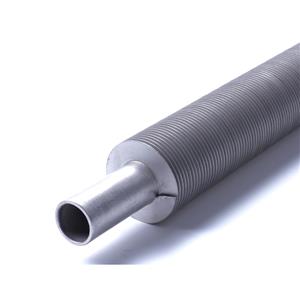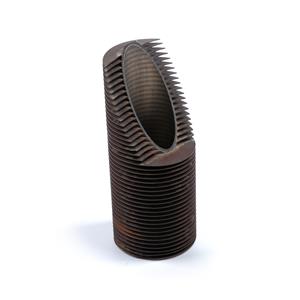
Twisted Tube

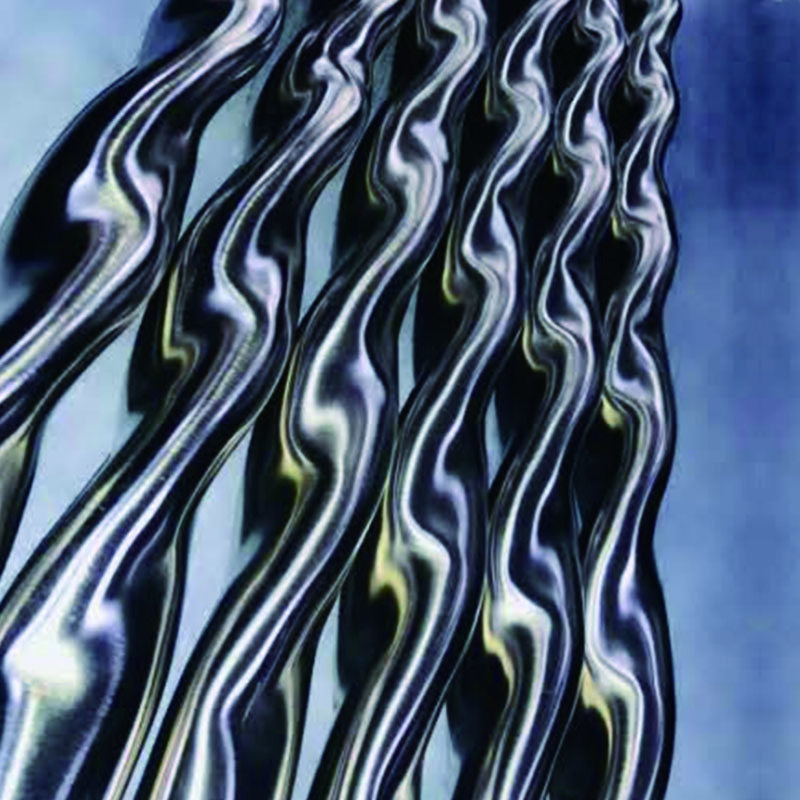
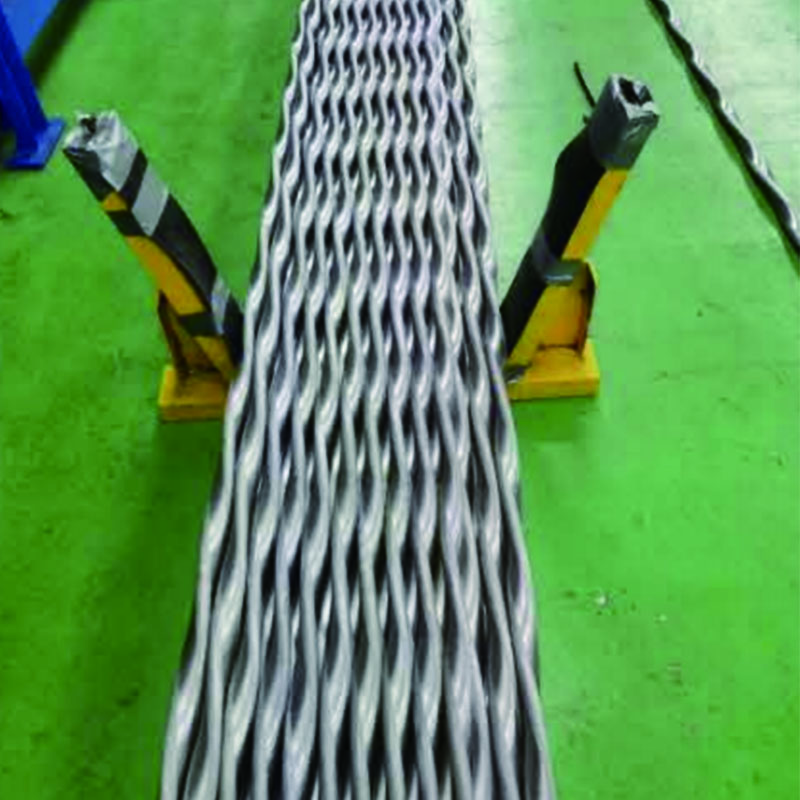
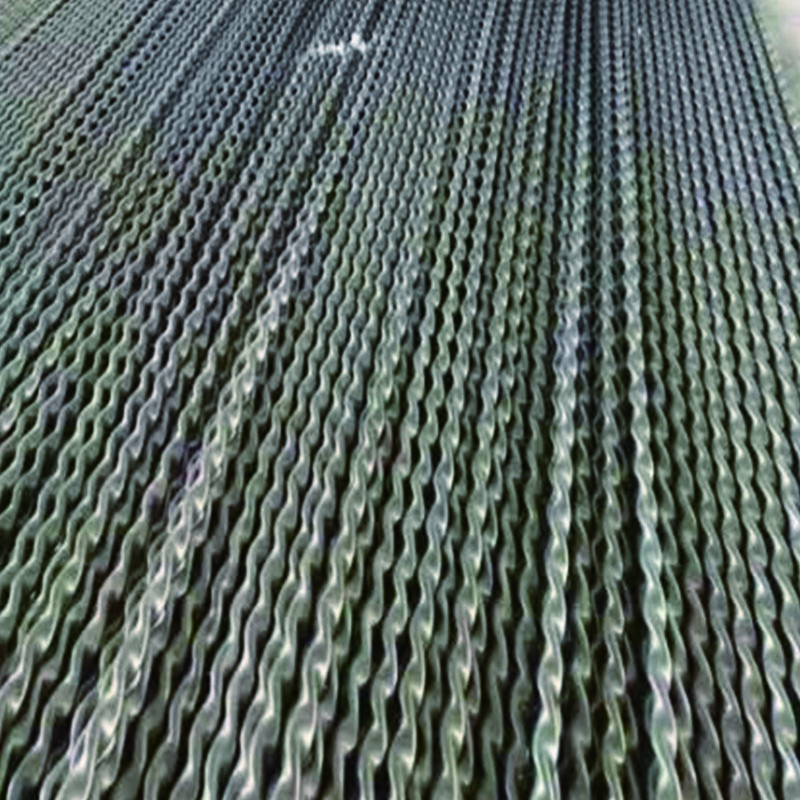
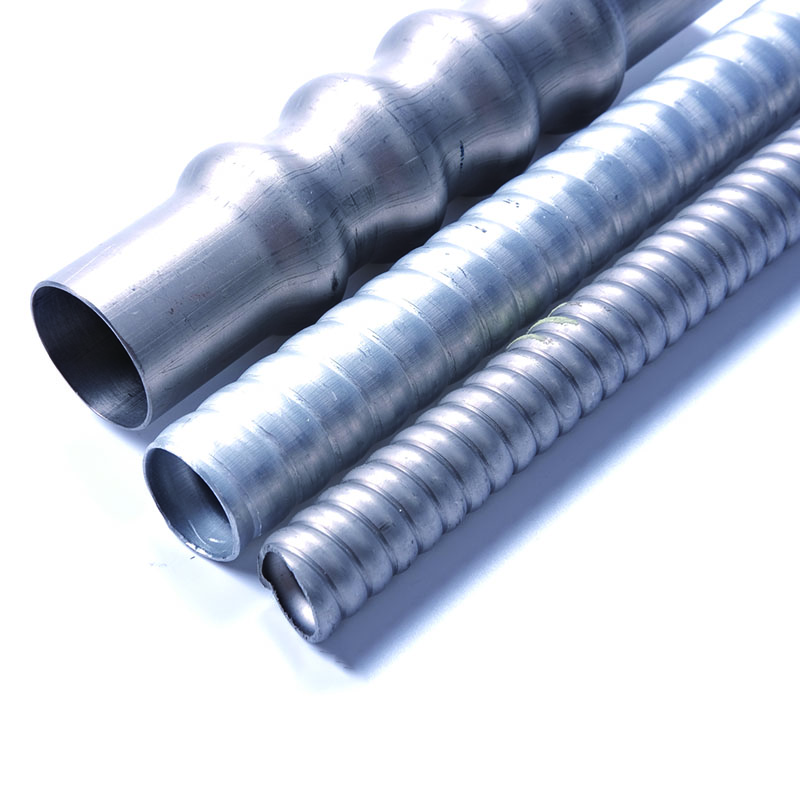
The advantage of Twisted tubes is that they promote heat transfer through the creation of a continuous swirl flow that constantly disrupts the boundary layer, this way their efficiency can be increased significantly over that of plain tubes. Besides their special shape, the tubes are capable of minimizing the accumulation of deposits making the fouling process very slow, hence the time for cleaning can be extended and maintenance costs will be reduced. The twisted pattern results not only in a stronger mechanical structure but also a vibration caused by the flow is suppressed, so the running of the equipment is much more stable. Higher-performing heat exchangers mean that heat exchangers can be designed smaller, which helps in saving both space and material. In general, twisted tubes provide a dependable way to enhance thermal efficiency, cut down operational costs, and increase the lifespan of equipment used in heavy-duty applications.
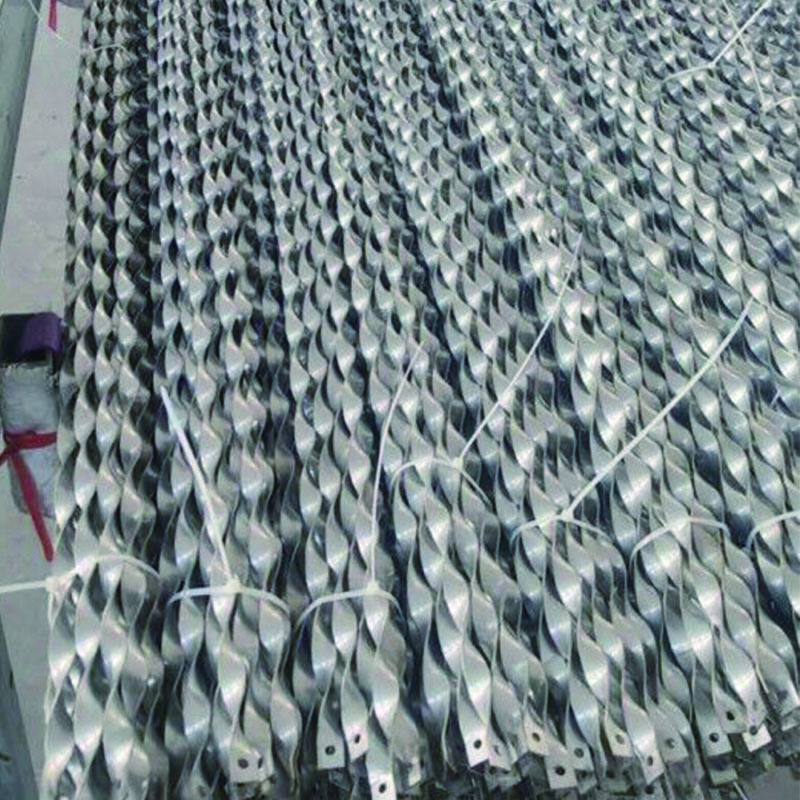
Turbulence Strip
The type of turbulence strips, the flat strip is the simplest one which is used in some manner to suggest the idea of turbulence strip and brush wire turbulence strip. By punching a flat strip a series of spoiler flanging and correspondingly fluid via holes is made, which results in a drastic increase in the heat exchange surface area of the heat exchange tube. After the turning of the spoiler flanging, its surface is found to be perpendicular to the heat exchange tube axis. Also, the two points of the upper and lower spoiler flanging, which are next to each other, face in opposite directions. Therefore, the fluid arriving in the heat exchange tube can locally zigzag along the two sides of the flat strip spoiler inside the tube as it follows the path or channel formed by both the spoiler flanging and fluid via holes. In this way, the heat exchange surface area is significantly increased and hence the heat exchange efficiency is also improved.
Typical technical parameters
material:carbon steel, stainless steel, aluminum alloys, or other corrosion-resistant alloys
strip thickness: 0.5 mm -30 mm
strip width: 5 mm -30 mm, depending on tube diameter
twist ratio or pitch: 1.5D - 10D, where D is the tube inner diameter
perforation ratio: 10 percent to 40 percent for perforated designs
applicable tube inner diameter: 10 mm to 100 mm
operating temperature: 500°C, depending on the material
operating pressure: typically up to 10 MPa, depending on system design
Performance Characteristics
The main purpose of a turbulence strip is to disrupt a laminar boundary layer of fluid.
If a diffuser experiences flow separation, it generates two vortices. In fact, the fluid undergoes forced mixing and rotation. In other words, laminar, orderly velocity and scalar fields are converted into turbulent, disordered ones.
That single change of flow results in a very significant increase in turbulence intensity which in turn leads to the better mixing of the cold and hot fluids in the heat exchangers.
Applications
Turbulence strips are often found in industrial and domestic sectors mainly dealing with heat exchangers of high efficiency or fluid mixers. Therefore, one can say that shells and tube heat exchangers, economizers and reheaters in boiler systems, air preheaters etc., constitute most of their applications.
The turbulent strips will have surface grooves that provide a way to influence the flow near the surface so that the friction and energy loss are both reduced to the minimum and the flow is well stabilized. On the other hand, they are also very helpful in controlling vortices which are the main cause of noise and vibrations.
FAQ:
1. Are you manufacturer or trader?
We are titanium tube manufacturer producing from melting titanium sponge, extruding hollow billet, rolling to finished tubes and destructive test mechanical test, chemical analysis, non-destructive tests like Ultrasonic test, Eddy current test, Pneumatic test and hydrostatic test are available in house.
Besides titanium tube production line we also have finning lines. Our factory is still expanding and will invest more on finning facilities.
2. How many workers are there in your factory?
We will have 210 staff members by 2026.
3. How fast can you deliver the materials?
The delivery time depends on the size and quantity. Usually it takes 45 days.
4. What is the payment term you can offer?
Mainly it will be 30% payment by T/T, balance before shipment. Letter of Credit is also very welcome. We will discuss it based on different projects.
5. Can you provide third party inspection service?
Of course, third party inspection such as BV/TUV/SGS/LR etc can be arranged. We can also issue EN10204 3.2 certificate.
6. What is your annum turnover?
For 2025, the turnover of our whole group including factory and the export company is expected to be 100 million US dollars.
7. What is the percentage of your export and domestic market share?
Up to now we have 30% of orders for export and 70% for domestic market but we are aiming to increase more export investment and hopefully the percentage can be 50-50 in the near future.
8. What country are your clients from?
We are working with overseas clients from Europe such as Netherland, France, Italy, Spain etc., USA, Korea, Japan, Indonesia, Vietnam, Singapore, Chile, Argentina, Brasil, Russia, Belarus, Uzbekstan. We do business with clients worldwide. Every client is welcome to contact us for inquiry and we will be happy to serve our clients. We also invite our clients to visit our factory for onsite audit.