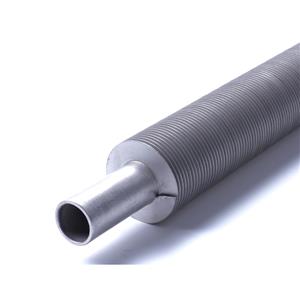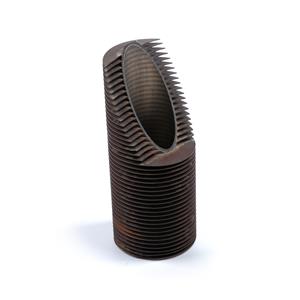
Turbulence strip

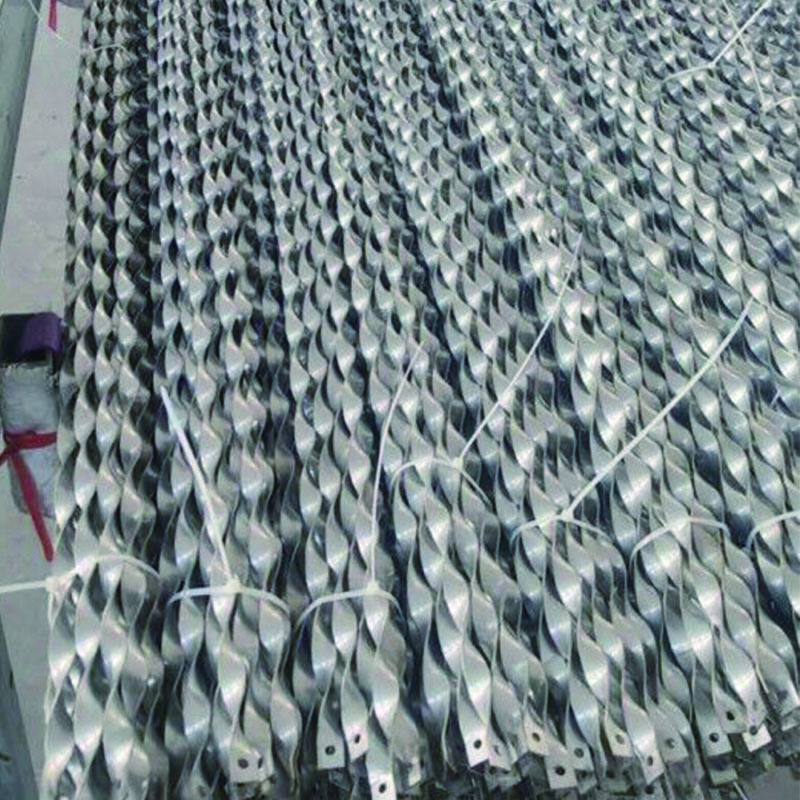
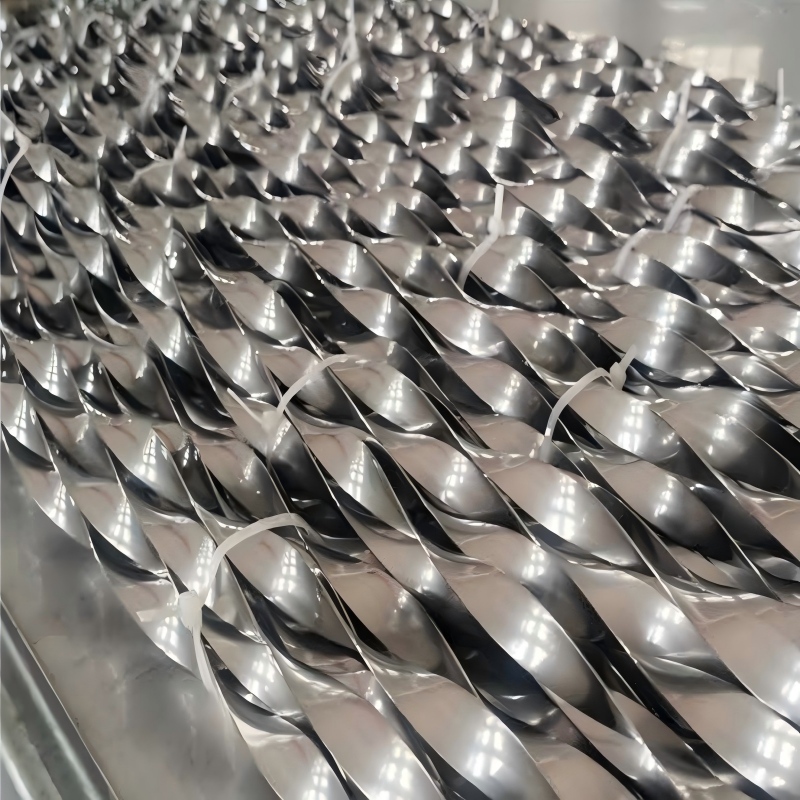
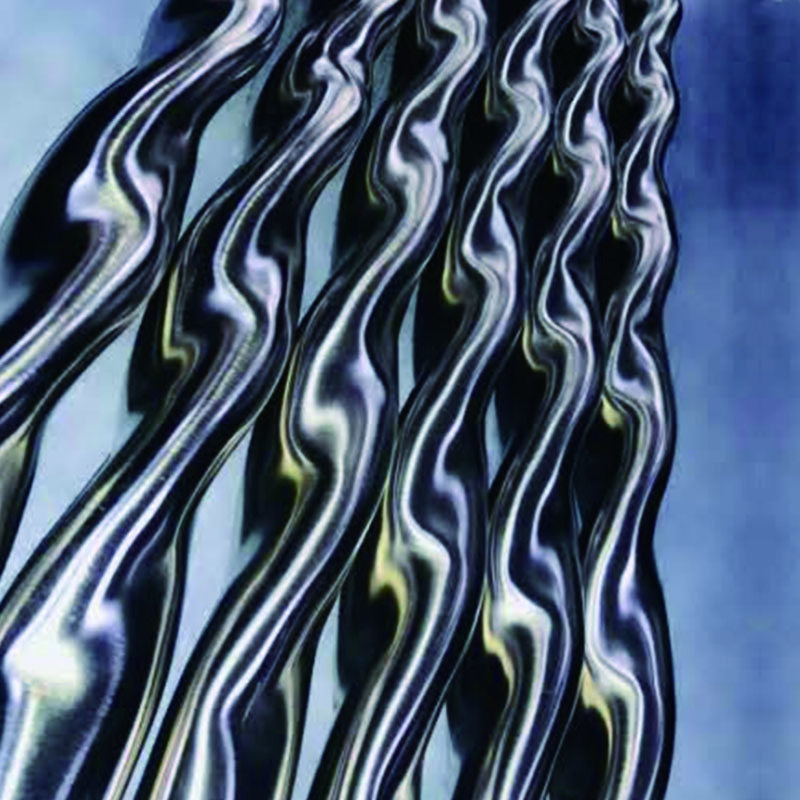
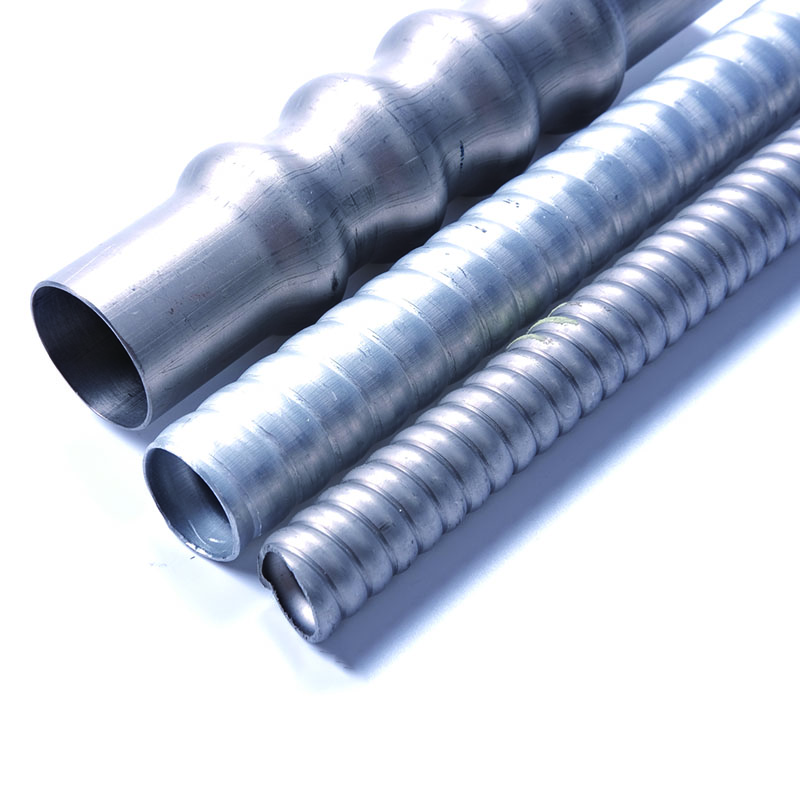
Turbulence strips are designed to enhance heat transfer performance by inducing strong turbulence and swirl flow inside the tube. By continuously disrupting the boundary layer, they significantly improve the heat transfer coefficient compared to plain tubes. Their presence also helps reduce fouling by preventing particle deposition on the inner surface. Easy to install and cost-effective, turbulence strips can be retrofitted into existing heat exchangers without major modifications. They offer an efficient solution to boost thermal performance, reduce maintenance frequency, and optimize overall system operation.
Turbulence Strips
The majority of turbulence strips are flat strip, and some are turbulence strip and brush wire turbulence strip. In order to strengthen the heat exchange area of the heat exchange tube, a plurality of spoiler flanging and corresponding fluid via holes are punched on the flat strip spoiler. The turned out surface of the spoiler flanging is vertical to the axis of the heat exchange tube, and the adjacent upper and lower spoiler flanging points in opposite directions, so that the fluid entering the heat exchange tube can zigzag between the two sides of the flat strip spoiler in the tube along the channel formed by the spoiler flanging and fluid via holes, increasing the heat exchange area and improving the heat exchange efficiency.
Turbulence Strips use surface grooves to modify flow near the wall, reducing friction and energy loss while making the flow more stable. They additionally aid in the management of vortices, thus reducing noise and vibration. If appropriately dimensioned, they can boost performance and find extensive applications in the aerospace field, pipelines, and energy-saving devices.
Common Technical Specifications
Material: carbon steel, stainless steel, aluminum alloys, or other corrosion-resistant alloys
Strip thickness: 0.5 mm -30 mm
Strip width: 5 mm -30 mm, depending on tube diameter
Twist ratio or pitch: 1.5D - 10D, where D is the tube inner diameter
Perforation ratio: 10 percent to 40 percent for perforated designs
Applicable tube inner diameter: 10 mm to 100 mm
Operating temperature: up to 500°C, depending on the material
Operating pressure: typically up to 10 MPa, depending on system design
Performance Characteristics
Theprimary role of the turbulence strip is to interfere with the smooth boundary layer of the fluid. A fluid moving through a diffuser is forced to separate, mix, and rotate, changing from an orderly laminar flow to a chaotic turbulent flow.
Inheat exchangers, such a disruption has the potential to drastically raise the level of turbulence, enabling a greater degree of mixing of cold and hot fluids.
Applications
Turbulence strips are mainly focused on industrial and civilian equipment that requires efficient heat exchange or fluid mixing. For example, shell and tube heat exchangers, economizers and reheaters in boiler systems, air preheaters, etc.
FAQ
1. Are you manufacturer or trader?
We are a manufacturer & factory specializing in titanium tubes. Our production process covers the whole chain, from melting titanium sponge to extrusion, rolling, final inspection, and mechanical testing. Chemical analysis and non-destructive testing such as ultrasonic, eddy current, pneumatic, and hydrostatic tests can be performed on the premises. Besides, we run finning production lines, and our factory is increasing.
2. How many people work in your factory?
As of 2026, we have about 210 staff.
3. How long does it usually take to deliver your products?
Delivery time depends on the size and specifications of the order, but the regular lead time is about 45 days.
4. What payment terms do you offer?
Our usual conditions 30%T/T in advance and balance against B/L copy. L/C is also acceptable, and that depends on the particular project.
5. Do you allow third-party inspection?
Yes, inspection can be done by such organizations as BV, TUV, SGS, and LR. We also provide EN10204 3.2 certification.
6. How large is your annual turnover?
During 2025, our group reached a total turnover of nearly 100million USD which is manufacturing and exporting operations combined.
7. How much of your products are exported?
At present around 30% of our work is export while 70% is domestic. We do one thing increase the international shares of the exports so as to reach the balanced ratios of the two in the future.
8. Where are the locations of your clients?
We supply clientele globally, including Europe(Netherlands, France, Italy, Spain),America, Korea, Japan, Southeast Asia, and South America. We look forward to your inquiries anywhere in the world and also your visit to be able to evaluate our factory will be very much welcomed.